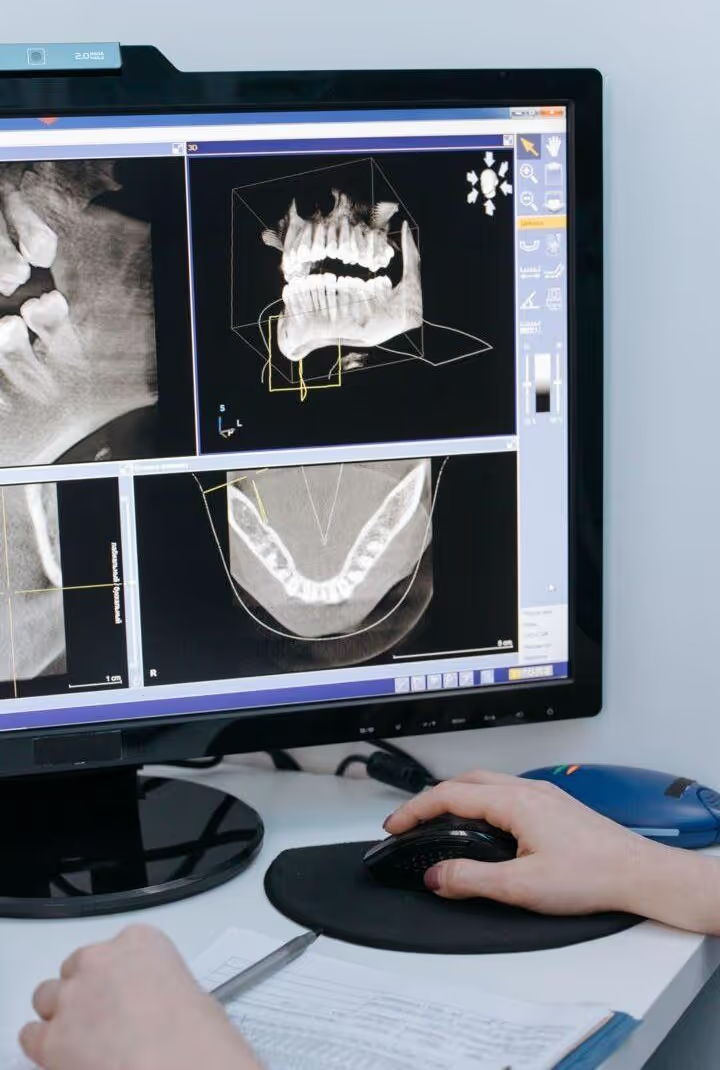
Low-radiation, high-resolution digital images that allow us to see between teeth and below the gumline for accurate diagnosis.
• Uses up to 90% less radiation than traditional film X-rays.
• Provides instant, high-definition images for faster, more accurate diagnoses.
• Helps detect hidden decay, bone loss, and cysts early.
Recommended for all new patients, and annually thereafter (or as needed) based on your specific dental health and risk factors.
A technician will place a small, comfortable digital sensor in your mouth. The image appears on our screen instantly, and we’ll use a lead apron and thyroid collar for your complete protection.
When it comes to diagnosing hidden dental issues, precision and safety are paramount. At Advanced Dental Care, we utilize state-of-the-art digital radiography, which produces high-definition images of your teeth and jawbone while exposing you to up to 90% less radiation than traditional film X-rays.
These instant, highly detailed images allow our Toledo team to detect hidden decay, monitor bone levels, and identify potential issues long before they become visible to the naked eye. By combining cutting-edge diagnostic technology with a gentle, patient-first approach, we ensure you receive the most accurate care with the highest safety standards.
1. Comfort & Protection
We start by placing a lightweight lead apron and a thyroid collar over you to ensure your complete protection from any unnecessary exposure.
2. Digital Sensor Placement
A technician will gently place a small, comfortable digital sensor into your mouth. Unlike traditional film, these sensors are slim and flexible for maximum comfort.
3. Instant High-Definition Imaging
The moment the image is captured, it appears on our monitors in high definition. This allows us to zoom in, enhance, and analyze your tooth structure in real-time.
4. Comprehensive Review
The doctor will review the images with you right on the screen, pointing out exactly what is happening beneath the surface and explaining any necessary treatment clearly.
Not necessarily. Full sets are taken every 3–5 years, while "bitewings" are taken annually or as needed based on your risk factors.
Yes. The amount of radiation from a set of digital dental X-rays is less than what you receive from a short airplane flight.
Only when necessary to detect hidden issues. We use child-sized sensors and lead protection for safety.
You might need them removed if they are impacted, coming in at an awkward angle, causing pain, or creating crowding. We evaluate this using a 3D scan or X-ray.